

Wooden signage can give a business a warm, distinctive appearance that feels very different from acrylic, metal or plastic signage. Natural wood grain adds character, while laser engraving and full-colour printing make it possible to create professional branding that still feels individual.
Choosing the right wooden signage design is about more than appearance. You need to consider where the sign will be displayed, whether it is for indoor use or a suitable outdoor setting, how far away visitors will see it, how much information it needs to communicate and which format suits the location.
This guide compares engraved, printed and freestanding wooden signs for cafés, shops, salons, restaurants, offices and other commercial spaces. Wall Gems also produces custom wooden signs for businesses that need branded displays, directions, entrance signs or promotional signage.
If you already know what you need, explore our custom wooden signs range to compare the available options.
Wood has a natural aesthetic that can make signage feel warmer and more individual than many conventional sign materials.
It can work particularly well for:
cafés and restaurants
salons and barbers
independent shops
hospitality venues
craft and handmade brands
offices and reception areas
studios
events
Wooden signage does not have to look rustic. Clear fonts, simple shapes and restrained colours can create a modern, professional appearance.
The important thing is to match the design to the brand and setting rather than choosing wood simply because it looks attractive.
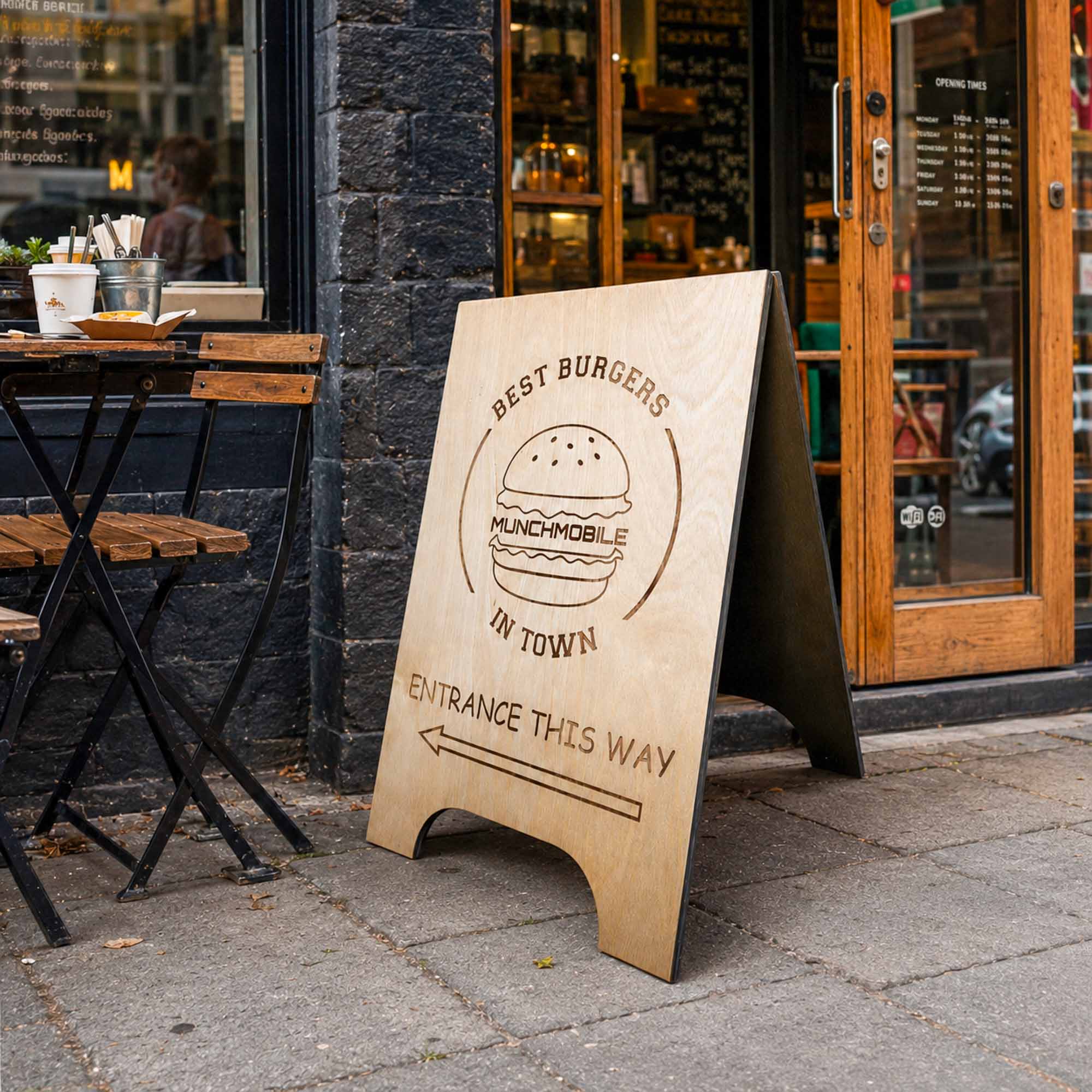
For many businesses, the choice comes down to three practical options:
engraved wooden signs
printed wooden signs
wooden A-board pavement signs
Each has a different purpose and visual character.
Engraving works particularly well for clean lettering and simpler logos. Full-colour printing provides greater freedom where branding depends on colour or detailed graphics. A-boards provide a portable option for entrances, pavements and events.
Laser engraving removes a small amount of the wood surface to create lettering, logos or simple graphics.
It can produce crisp edges and fine details where the artwork is suitable, while allowing the natural grain to remain an important part of the finished sign.
Engraving is a good choice for:
business names
logos with clear outlines
room names
directional signs
plaques
simple messages
understated branding
It works best when the artwork uses clear shapes rather than photographic images or complicated colour gradients.
If your logo is simple and you want the wood itself to remain visually prominent, engraving can be an excellent choice.
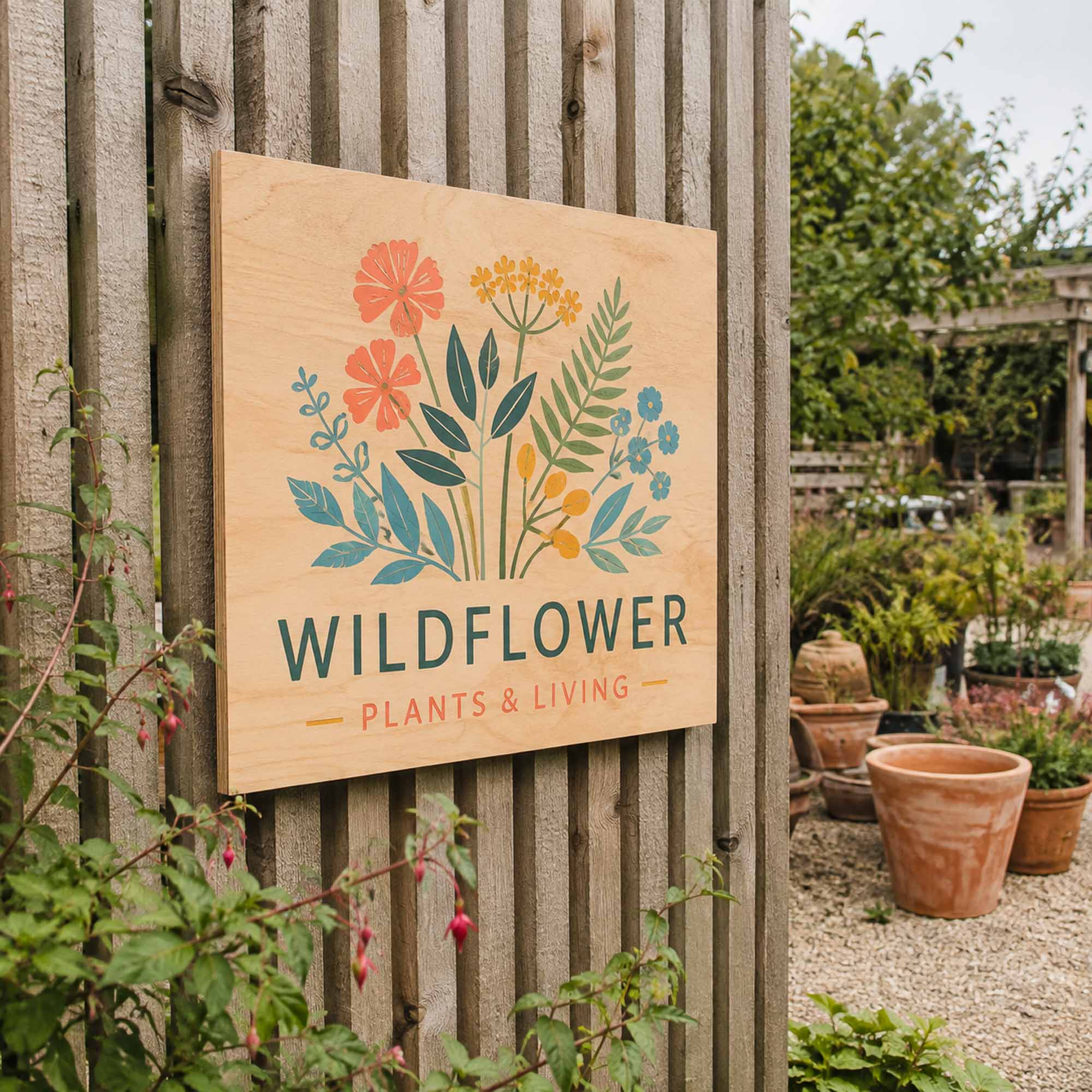
Full-colour UV printing is more flexible when branding relies on colour, illustration or detailed artwork.
It can reproduce:
coloured logos
illustrations
menus
promotional messages
QR codes
more complex graphics
A printed wooden sign combines the natural appearance of wood with modern full-colour branding.
This option is particularly useful when accurate colour is important or when an engraved design would lose too much detail.
Even with full-colour printing, readability still matters. Detailed artwork should not overwhelm the main message.
A wooden A-board is a freestanding sign that can be moved and positioned where it is most useful.
Businesses commonly use A-boards for:
logos
menus
opening information
daily specials
promotions
directions
event information
QR codes
Our custom wooden A-board pavement sign can be personalised with your own text, logo or artwork.
A-boards are especially useful for cafés, shops and salons where customers approach along the pavement and may not immediately see a wall-mounted sign.
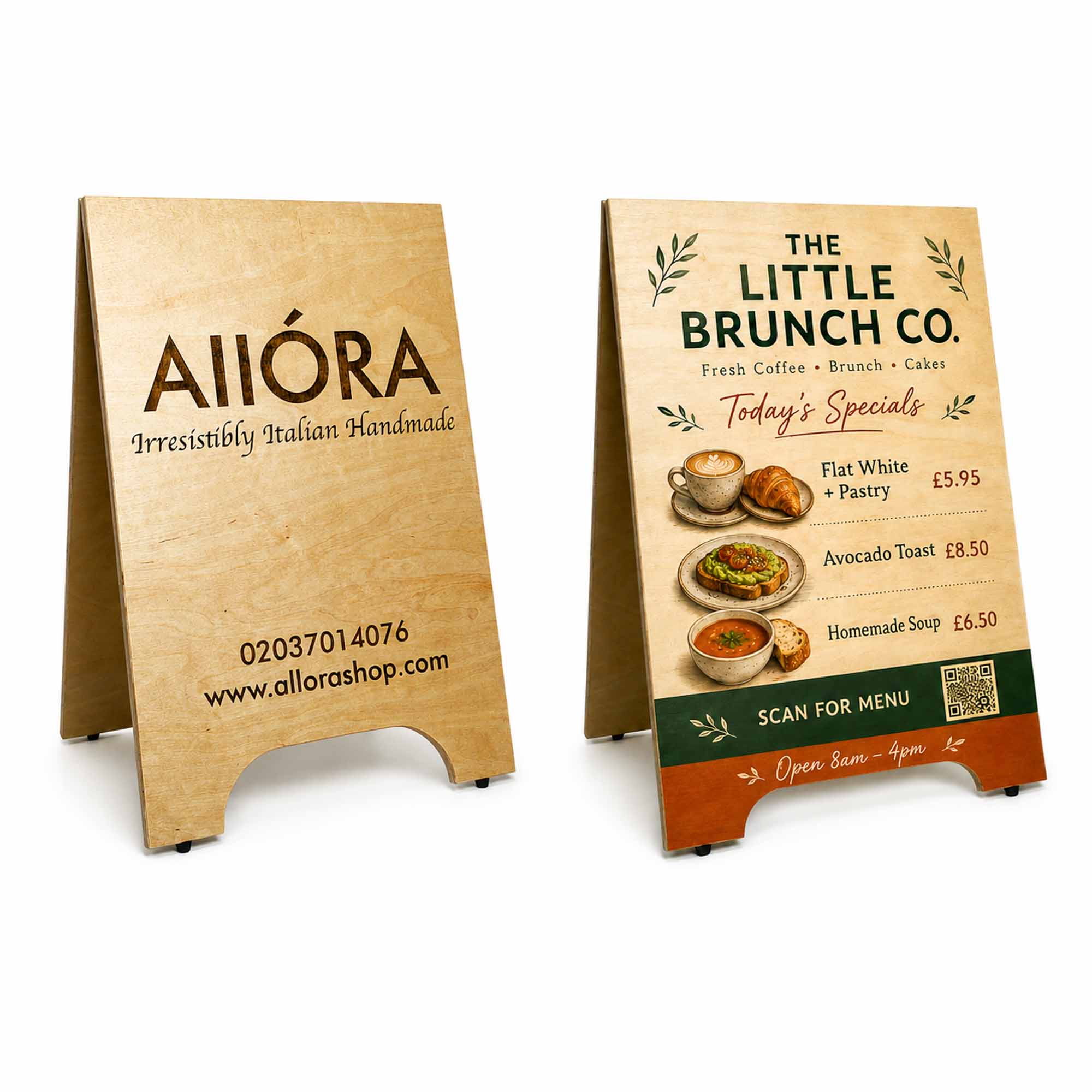
Neither is automatically better. The right choice depends on the artwork and the style you want.
Engraved wooden sign | Printed wooden sign |
|---|---|
Natural, tactile appearance | Full-colour branding |
Excellent for lettering and simple logos | Better for detailed artwork |
Wood grain stays prominent | Greater colour flexibility |
Classic or handcrafted character | Contemporary and versatile |
Best with strong lines and shapes | Suitable for complex graphics |
If your logo relies mainly on lettering and outlines, engraving may work very well.
If brand colour or detailed artwork is essential, printing usually gives greater flexibility.
Different woods and wood-based products vary in grain, colour, weight and surface texture.
For the Wall Gems range, birch plywood is particularly useful because it combines a natural appearance with a smooth, consistent surface suitable for engraving and full-colour production.
You may also see products described simply as wood signs. Whatever terminology is used, the surface needs to suit the artwork and intended environment.
A heavily textured wood may suit a rustic aesthetic but make fine detail harder to reproduce. A smoother surface gives greater control over logos and smaller lettering.
Good wooden signage design starts with clarity.
The natural substrate may be visually appealing, but the sign still needs to communicate quickly.
People should understand the most important information first:
business name or logo
main message
secondary information
Avoid filling every available space.
Negative space around the logo and wording helps the design feel more balanced and professional.
Typography should match the personality of the business while remaining legible.
Decorative fonts may suit cafés, salons or creative brands, while clean sans serif fonts often work well in modern retail and office environments.
Our guide to fonts and readability in signage explains how spacing, contrast and viewing distance affect legibility.
Wood already has natural grain and colour, so the background contains visual detail.
Engraved lettering usually benefits from a clear contrast with the surface, while full-colour graphics need to remain visible against the natural tone of the wood.
A logo that looks clear on a white computer screen may need adjustment before production.
Dimensions should be based on where the sign will be displayed and how people will view it.
Consider:
viewing distance
available space
mounting height
amount of text
whether people are walking past
surrounding furniture or displays
whether the purpose is branding or directions
A small plaque viewed at close range can contain more detail.
A pavement A-board needs larger lettering and a simpler message because customers may only look at it for a few seconds.
Placement matters too. A beautiful sign in the wrong position may be less effective than a simpler sign placed where visitors naturally look.
Wooden signage works particularly well in environments where natural textures already form part of the interior or brand identity.
For shops, it can be used for:
logo displays
opening information
counter signage
directions
promotional messages
Cafés and restaurants may use:
menus
entrance signs
wall displays
personalised plaques
table signage
pavement A-boards
A colourful printed design can suit a lively café, while engraved lettering may fit a more traditional or understated restaurant.
These are also useful wooden signage ideas for businesses trying to create a more consistent visual theme across their premises.
Wood does not need to look informal or rustic.
Precise engraving, clean typography and simple shapes can create professional signage suitable for:
reception areas
offices
studios
meeting rooms
internal directions
room identification
Wooden plaques and logo displays can add warmth to interiors dominated by glass, white surfaces and metal furniture.
For a modern office, simple layouts and generous spacing usually work better than heavily decorative designs.
For indoor use, wooden signage is protected from most direct weather exposure and can work well in shops, offices, restaurants and reception spaces.
Outdoor applications need more consideration.
Rain, sunlight, moisture and temperature changes can affect wood over time. A durable sign requires a substrate, finish and construction appropriate to the expected conditions.
A sign beneath a sheltered entrance experiences a very different environment from one permanently exposed to wind and rain.
For that reason, outdoor suitability should always be confirmed for the specific product and placement rather than assuming all wooden signs perform the same way.
Wood is often associated with sustainable signage because it is a natural material, but sustainability depends on more than appearance.
Relevant factors include:
material sourcing
efficient production
expected product life
maintenance
finishes and coatings
transport
Durability also matters. Choosing a sign that is suitable for its environment can reduce unnecessary replacement.
A wooden product should therefore be chosen because it suits the application, not simply because wood is perceived as environmentally friendly.
The correct fixing method depends on the size, weight, surface and placement.
Possible methods include:
screws
concealed fixings
hanging systems
mechanical fixings
stand-off fixings
suitable adhesives for appropriate applications
Stand-off fixings can create a shadow gap behind the sign, adding visual depth.
Brick, plasterboard, timber, tile and other surfaces may require different fixing methods, so larger or heavier signs may benefit from professional installation.
A simple way to decide is:
Choose an engraved wooden sign if:
you want a natural, tactile appearance and your logo or own text uses clear lines and shapes.
Choose a printed wooden sign if:
you need full colour, detailed artwork or accurate brand colours.
Choose a wooden A-board if:
you need a portable sign for a pavement, entrance, café, restaurant, shop, salon or event.
You can compare the available products on our custom wooden signs page.
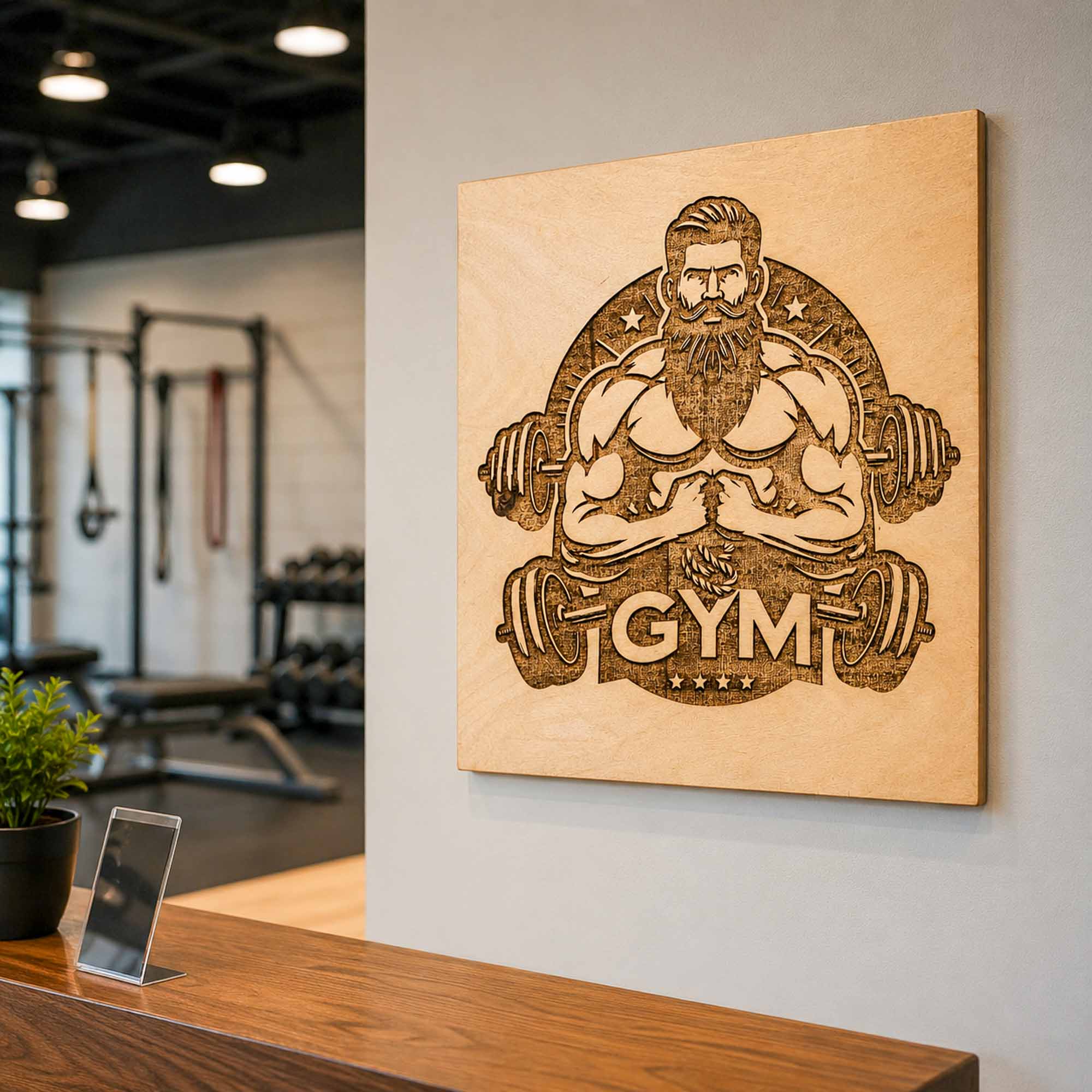
Yes. Logos can be engraved or printed depending on their detail, colour and design.
Yes. Personalised wooden signs can include your own text, company name, message, logo or suitable supplied artwork.
Yes. They can work well for shops, cafés, restaurants, offices, salons, hospitality venues and other commercial settings where the natural aesthetic suits the brand.
Engraving works particularly well for simple lettering and logos. Printing offers more flexibility when full colour or detailed graphics are required.
Some wooden signs can be suitable outdoors when the finish and construction are appropriate for the level of exposure.
The right dimensions depend on viewing distance, available space, the amount of information and where the sign will be displayed.
Wooden signage can give a business a distinctive identity while still delivering the clarity and professional appearance expected from effective signage.
Engraving works well for simpler logos and lettering. Full-colour printing provides greater flexibility for detailed branding, while wooden A-boards offer a practical freestanding option for businesses that want to reach passing customers.
Good wooden signage design combines the natural character of wood with clear typography, suitable dimensions, thoughtful placement and a design that fits the brand.
To compare available options, sizes and finishes, explore our wooden signs range.
Explore our made-to-order signage options or tell us what you are looking to create.
More practical signage guides and ideas from Wall Gems.

Our captivating wall signs are crafted to reflect the essence of your brand, communicating your message effectively before anyone steps through the door.